




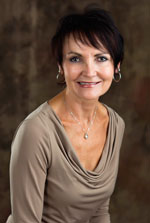
As you are likely aware, we have released preliminary state assessment results. The news is good: student performance shows gains in English language arts and math in all but one grade level. I commend school districts for the hard work and dedication that has led to these improvements.
It takes about 100 students to show a 1 percent increase in proficiency at each grade level, so we are talking about 300 to 600 more students testing proficient in many grade levels, which is significant progress. We also saw growth overall for our Native American students.
Our youngest tested students are showing the greatest gains. This makes sense, since they have been working with these content standards in math and English language arts for most, if not their entire, school careers.
At the other end of the spectrum, our 11th grade assessment results are largely flat. We aren’t entirely sure why this is, but I think several factors are at play. Our state’s 11th graders have spent a smaller proportion of their schooling with these content standards, and they are much more familiar with the former state assessment, which was essentially a “bubble test.” It did not require them to apply and demonstrate their knowledge in the way the Smarter Balanced assessment does.
We also know that some of our 11th grade students feel the test has little value or meaning for them. I urge you to share the message with your high school students and their parents that all six of our state’s public universities accept Smarter Balanced scores for placement purposes. This makes the assessment very valuable. Students who score in Levels 3 or 4 in math and/or English language arts avoid the need for remediation and can automatically enter credit-bearing courses in the respective content area once they get to college.
I’ve said repeatedly that we must stay the course with regard to our state standards in English language arts and math. These preliminary assessment results bolster that message.
I am also pleased to report that a recent lawsuit against the state of South Dakota for its participation in a multi-state testing consortium was dismissed.
Thank you for everything you do for South Dakota students.
| HOT TOPICS | |
 |
Preliminary state assessment results show gains
Secretary Schopp recently presented preliminary assessment results to the Legislative Planning Committee in Pierre. Access her PowerPoint presentation and meeting audio below: • Presentation to Legislative Planning Committee [http://doe.sd.gov/secretary/documents/062016-PC.pdf] • Audio (starts at 2:20:20) [http://sdpb.sd.gov/SDPBPodcast/2016/Interim/LPC06202016.mp3] |
| ESSA update: What U.S. Ed’s proposed rules mean
The U.S. Department of Education has proposed rules related to the Every Student Succeeds Act. Laura Scheibe, administrator of accreditation and accountability for the South Dakota Department of Education, summarizes these draft rules in this PowerPoint presentation [http://doe.sd.gov/secretary/documents/0616-EDNP.pdf]. Public comment on the rules is due to U.S. Ed by Aug. 1; DOE will be commenting and encourages others to do so as well. |
|
| Board of Education approves rules
At its June 20 meeting, the state Board of Education approved rules related to shared services. These rules lay out the application process, guidelines and criteria for the shared services grant program established in Senate Bill 133 of the 2016 education package. The program encourages the sharing of employee services between school districts. The Department of Education plans to make grant applications available to school districts later this summer. The grant review committee will give priority to applications addressing rural or sparsity needs, increased opportunities or services for students or increased efficiency. An individual grant may be used to fund up to three shared services employees. Grant funding is intended to help initiate the process of sharing services and will be awarded for up to three years, with a 50 percent reduction in year two and a 75 percent reduction in year three. Applicants must demonstrate a need for shared employees among participating districts and the ability to sustain the plan for sharing employee services. The board also put into administrative rule the annual deadline and requirements for school districts to report their educational structure data in order to comply with all reporting and state aid calculation requirements. The new annual deadline will be March 1. Several rules related to technical institutes were also approved. The board’s next meeting is July 18 in Mitchell. Follow board activity at doe.sd.gov/board. |
 |
Districts encouraged to administer NCRC assessment
Time to plan for National Career Readiness Certificate assessments in your school district during SY 2016-17 for high school juniors and seniors. Schools must apply to administer the NCRC tests. Access the application on SDMyLife [http://sdmylife.com/educators/national-career-readiness-certificate-ncrc/]. Questions? Contact Barb Unruh [barb.unruh@state.sd.us] at the Department of Labor and Regulation, (605) 773-3101. |
|
Teacher shortage areas announced for 2016-17
Each year, the U.S. Department of Education designates teacher shortage areas. This federal designation may qualify borrowers for deferment or forgiveness of outstanding Federal Family Education Loans, Federal Stafford Loans or Federal Perkins Loans. Qualification depends on the type of loan and the date issued. These designations may also enable grant recipients to fulfill their teaching obligation under the Teacher Education Assistance for College and Higher Education (TEACH) Grant Program. Individuals teaching in one of the designated areas can contact the lender holding their loans to determine whether the loans qualify for deferment or forgiveness. The Federal Student Aid Hotline at 1-800-4FED-AID is also available to answer questions. School principals are delegated authority to provide certification that eligible borrowers are teaching in a designated teacher shortage area. State Academic Disciplines or Subject Matter: Career & Technical Education English Language Learners Fine Arts Language Arts Mathematics Physical Education/Health Science Self-Contained Social Science Special Education (Non-Core) World Languages Other Geographic Areas: Bennett County Cheyenne Indian Reservation Corson County Crow Creek Indian Reservation Jackson County Lower Brule Indian Reservation Mellette County Roberts County Oglala Lakota County Todd County |

©2016 S.D. Department of Education, 800 Governors Drive, Pierre, SD 57501 - (605) 773-3134